Driving on a spare tire is meant to get you to a tire shop, not to carry on with your week. Most compact spares, the narrow ones often called donuts, are rated for no more than 50 miles per hour and roughly 50 to 70 miles of total driving; the exact numbers are printed on the spare’s sidewall or a sticker on the wheel. A full-size spare can go further, but it still needs a pressure check before you trust it. Here is what those limits mean on the roads around Santa Cruz, and when to stop.
Compact Spare vs Full-Size Spare
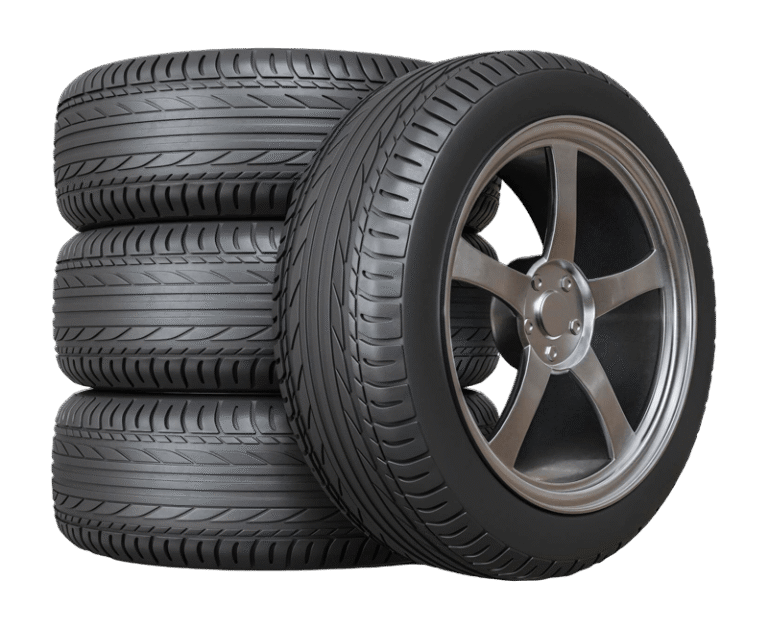
A compact spare is lighter, narrower, and smaller in diameter than your regular tires. It has a thin tread and is built to save trunk space and weight, not to handle long distances, heat, or hard braking. That is why the speed and mileage limits are so low. A full-size spare matches your other tires, or nearly does, and can usually be driven normally once it is inflated correctly.
Check which one you have before you plan the drive. If the spare is narrower than your other tires, has a yellow or red warning label, or a wheel that looks different from the rest, treat it as a compact spare with all the limits that come with it.
How Fast You Can Drive on a Spare
The usual limit for a compact spare is 50 miles per hour. Above that, the thin tread heats up faster than it can shed heat, braking distances get longer, and the car handles differently in corners because one corner has much less grip than the other three. Stay in the right lane, leave extra following distance, and brake earlier than usual.
On Highway 1 between Santa Cruz and Watsonville, where traffic often runs at 65 to 70, that means the slow lane with the hazards off and a steady 50 or less. If you cannot keep traffic safely around you at that speed, take the next exit and use surface streets like Soquel Drive instead.
How Far You Can Drive on a Spare
Most compact spares are rated for roughly 50 to 70 miles, and some owner’s manuals list less. That is enough to get from almost anywhere in Santa Cruz County to a tire shop, but not enough for a round trip over the hill to San Jose and back. The clock starts the moment the spare goes on, so head straight for a shop rather than running errands first.
A full-size spare that matches your other tires has no special mileage limit, but if it is older than about six years or has sat in the trunk underinflated, have it inspected before a long drive. Rubber ages even when a tire has never touched the road.
Check the Spare’s Pressure First
A spare that has been in the trunk for years is often low, and an underinflated compact spare fails faster than a flat tire. Many compact spares need about 60 psi, much higher than a regular tire; the correct number is printed on the spare’s sidewall. If you have a gauge, check it before you drive. If you do not, stop at the first gas station with an air pump.
When we do a flat tire change in Santa Cruz, the driver checks the spare’s pressure before you leave, because a spare that has been sitting for six years is often nearly flat too. It takes a minute and prevents a second roadside stop the same day.
Why Highway 17 Is a Bad Place for a Spare
Highway 17 combines everything a compact spare handles badly: steep grades, tight curves, heavy braking on the way down, and traffic that rarely drops below 50. Long downhill braking from the summit into Scotts Valley heats the brakes and the small tire on that corner, and the reduced grip shows up exactly where the road bends hardest.
If you get a flat on the Santa Cruz side and need to go over the hill, get the regular tire repaired or replaced first. If the flat happens on Highway 17 itself, use the spare only to reach the next safe exit or turnout, the same way you would if the car breaks down on Highway 17, and arrange the tire from there.
All-Wheel-Drive Cars and Compact Spares
Many all-wheel-drive cars are sensitive to one tire being a different size from the others. A smaller-diameter spare spins faster than the other three, and the drivetrain tries to make up the difference through the center differential or coupling. Over short distances most cars tolerate it; over longer ones it can overheat and damage drivetrain parts.
Check your owner’s manual; some list a very short distance limit for the compact spare on an AWD car, and some recommend putting the spare on a specific axle. If the manual is unclear or the drive to a tire shop is long, a flatbed tow is the safer way to move an AWD car with a flat.
Signs You Should Stop Driving on the Spare
Pull over if the car starts vibrating, pulls hard to one side, makes a new thumping noise, or if the tire pressure warning light flashes or comes on again. Stop if you smell hot rubber or brakes. Each of those means the spare, the wheel, or the brakes on that corner are under more stress than they can handle.
Stop and arrange help if you have already driven more than the limit on the sidewall, or if the spare has visible cracks or bulges. A spare that fails at speed is a blowout with even less control than the original flat.
From the Spare Back to a Real Tire
Once the spare is on, the next stop should be a tire shop. A puncture in the tread can often be patched from the inside, which is cheaper than a new tire. A tire that was driven flat, cut on the sidewall, or shredded needs replacing, and on some cars it is wise to replace the matching tire on the same axle too.
If the shop is too far for a compact spare, or the spare itself is low or damaged, our roadside assistance in Santa Cruz can plug a repairable tire on the spot, inflate the spare, or take the car to a tire shop on a flatbed.
Spare Tire Questions Santa Cruz Drivers Ask
How fast can I drive on a donut spare?
Most compact spares are limited to 50 miles per hour. Check the sidewall or the label on the wheel for your exact limit.
How many miles can I drive on a spare tire?
Compact spares are usually rated for about 50 to 70 miles. Full-size spares have no special limit but should be checked for age and pressure first.
Can I drive on the freeway with a spare tire?
Yes, at or below the spare’s speed limit, in the right lane, with extra following distance. If traffic is much faster than 50, use surface streets instead.
Is it safe to drive on a spare tire over Highway 17?
It is not a good idea. The grades, curves, and heavy braking stress a compact spare more than flat roads. Get the regular tire fixed first.
Can I put a compact spare on an all-wheel-drive car?
Usually for a short distance only. Check the owner’s manual for limits; for longer trips, tow the car to a tire shop instead.
If your spare is flat too, there is no spare at all, or you are not sure it will make it to the shop, call (831) 464-1155. A truck can inflate the spare, plug a repairable tire, or take the car on a flatbed to a tire shop anywhere in Santa Cruz County.