The engine stumbles, catches, stumbles again, and quits. The gauge said you had a little left. It was wrong, or you were on a hill, or the warning light came on twenty miles ago and the day got busy. Ran out of gas is embarrassing, but it is also one of the few roadside problems with a clean fix, as long as you handle the next hour correctly. Done wrong, an empty tank becomes a fuel pump replacement.
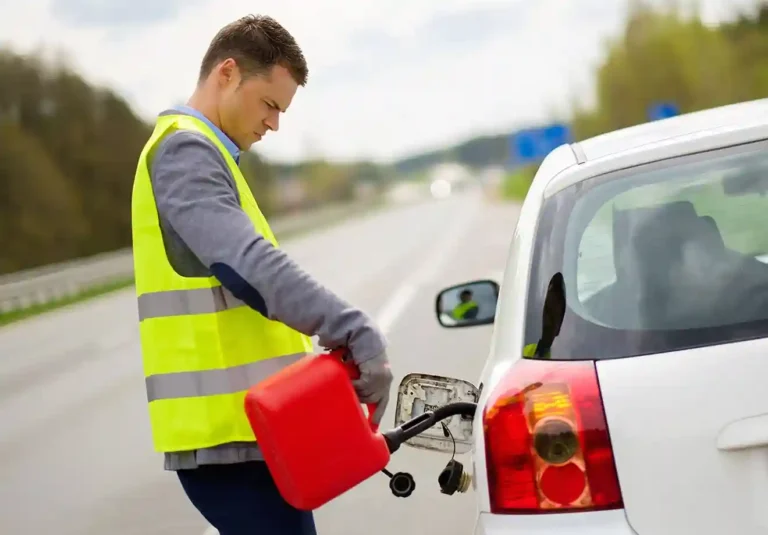
This guide covers what running dry does to the car, what to do in the first few minutes, how much fuel it takes to restart, why some cars refuse to start even after the tank has fuel in it, and when calling for fuel delivery in Santa Cruz makes more sense than walking to a station with a can.
The first few minutes after you ran out of gas
When the engine starts to surge, you have a few seconds of momentum. Use it to get as far right as the road allows. On Highway 1 south of Aptos or on Soquel Drive, that means the shoulder or a driveway. On a mountain road like Highway 9 or Bear Creek Road, it may mean a turnout a hundred yards ahead, and coasting there in neutral is better than stopping in a lane.
Hazard lights on. If you are on a road with traffic and no shoulder, get out on the side away from traffic and stand clear of the car. If you are safely off the road, stay in the car. Do not start walking along a highway with a gas can. People are hit doing this every year, and the time saved over waiting for a delivery is rarely more than a few minutes.
Is It Bad for Your Car to Run Out of Gas?
Running out of gas once is rarely serious, but it is not harmless. The electric fuel pump sits inside the tank and relies on fuel around it to stay cool, so running the tank dry makes it work hot, and making a habit of driving on fumes shortens its life. Sediment that settles at the bottom of the tank can also be pulled toward the fuel filter and injectors when the level gets very low.
Here is what happens when your car runs out of gas: the engine sputters and surges, then stalls, while the dashboard stays lit. Power steering assist and brake assist fade with the engine, so the wheel gets heavy and the brake pedal firms up after a press or two. That loss of control in traffic is the real danger, more than any damage to the car. Diesel engines are different: running one dry can pull air into the fuel system, which may need to be bled before it will restart, so do not keep cranking a diesel that has run out.
How much fuel it takes to restart
More than most people think. The pickup inside the tank sits above the very bottom, so a quart or two poured in may not reach it, especially if the car is on a slope. Two gallons is a safe amount for most cars. If the car is nose-down on a hill, more fuel or moving the car to level ground may be needed before the pump can draw.
After adding fuel, do not crank immediately. Turn the key to the on position without starting, wait five seconds, turn it off, and repeat two or three times. You will hear the fuel pump hum for a second or two each time. This primes the lines. Then crank for no more than ten seconds. If it does not catch, wait thirty seconds and try once more. Cranking for a full minute on an empty line is how starters and pumps get damaged.
Why the car may not start after refueling
Air in the lines is the usual reason, and priming as described above clears it on most gasoline cars. The second reason is a flooded engine from cranking too long, which clears if you hold the accelerator to the floor while cranking for a few seconds. The third is a fuel pump that overheated and died during the dry run; if the pump does not hum when you turn the key to on, this is likely, and the car needs a tow rather than more fuel.
The fourth reason is a battery drained by all the cranking. If the dash lights are dim and the starter clicks, the problem has changed from fuel to power, and a jump is needed before anything else. A roadside assistance truck that brings fuel will usually carry a jump pack for exactly this situation.
Why the gauge lied
Fuel gauges are calibrated for level ground. On a long grade, the fuel in the tank shifts and the float reads high or low. A car heading up Highway 17 toward the summit can show a quarter tank when the usable fuel is almost gone. The range estimate on the dash is a rolling average of recent driving; a week of city trips produces an estimate that is wrong for a highway run.
The low fuel light on most cars comes on with roughly two gallons left, which is 30 to 50 miles on a sedan and less on a truck or SUV. On the stretch of Highway 1 between Watsonville and Moss Landing, or between Davenport and Half Moon Bay, there are long gaps between stations, and two gallons may not be enough to reach the next one. A driver who needs towing in Watsonville after running dry on Salinas Road almost always saw the light somewhere near Aptos.
Fuel delivery versus walking to a station
Walking makes sense when the station is in sight and the road has a sidewalk. Almost everywhere else, it does not. Stations do not always sell cans, cans do not always fit in a jacket, and the walk back with a full can on a road shoulder is the most dangerous part of the whole episode.
Fuel delivery sends a truck with a few gallons to wherever the car stopped. The driver adds the fuel, primes the system, confirms the car runs, and if it does not, the same truck can tow it. For anyone on a highway, a mountain road, a farm road at night, or anywhere without a safe place to walk, this is the right call. Ask the dispatcher how long the truck will take and decide from there.
After the car is running
Drive to the nearest station and fill the tank, not just a few gallons. A nearly empty tank runs the pump hot and pulls more sediment. If the engine runs rough for more than a few miles, have the fuel filter checked. If it was a diesel, have the system bled properly even if it started.
Then fix the habit. Fill up at a quarter tank. Reset the trip meter at every fill so you know your real range. On long drives on Highway 1, plan the stations before you leave, because the gaps are longer than they look on the map.
Frequently asked questions
Does running out of gas damage the engine?
Not the engine itself. The fuel pump and filter take the strain. One episode on a healthy car usually causes no lasting harm. Repeated episodes shorten the pump’s life.
How much gas do I need to put in to start the car?
Two gallons is a safe amount for most cars. Less may not reach the pickup inside the tank, especially on a slope.
Can I put regular gas in a car that takes premium just to get going?
Yes, for a few gallons to reach a station. Modern engines adjust. Fill with the correct grade afterward. Never put gasoline in a diesel or diesel in a gasoline car; that is a tow and a fuel system flush.
Why won’t my car start after I added gas?
Air in the fuel lines, a flooded engine from over-cranking, a fuel pump that overheated, or a battery drained by cranking. Prime the system by cycling the key, limit cranking to ten seconds, and if the pump does not hum, call for a tow.
Is it safe to carry a gas can in the car?
A proper sealed can, empty, stored in the trunk, is fine. A full can in a hot car is a fire risk and the fumes are harmful. Keep it empty until you need it.
If you ran out of gas anywhere in Santa Cruz County, call (831) 464-1155. Say where the car is and what it is, and a truck will bring fuel, get it started, and tow it if it will not run.