After a car accident, the order is simple: check for injuries and call 911 if anyone is hurt, get out of traffic if the cars can move, exchange information with the other driver, photograph everything, and only then deal with the car. California also has two reporting rules that most drivers do not hear about until a letter from the DMV arrives. This guide walks through each step the way it actually plays out on Highway 1, Highway 17, and the streets of Santa Cruz County.
The First Five Minutes: Safety Before Anything Else
Turn on the hazard lights and check yourself and your passengers before you check the car. If anyone is hurt, complaining of neck or back pain, or confused, call 911 and do not move them unless the car is on fire or in the path of traffic. Adrenaline hides injuries; a person who says they are fine at the scene can feel very different an hour later.
If nobody is hurt and both cars can still roll, move them out of the travel lane to the shoulder, a side street, or a parking lot. Standing between two cars in a live lane is how a minor fender bender turns into a serious injury. On Highway 17 and the Highway 1 Fishhook, where shoulders are narrow, get everyone out on the side away from traffic and wait behind the guardrail rather than in the car.
If the car will not move, an airbag deployed, or fluid is pouring onto the road, leave it where it is, set the hazards, and get people to a safe spot. The car can wait. Nobody should stand next to it doing paperwork while traffic passes at speed.
When to Call 911, CHP, or the Local Police
Call 911 for any injury, any car blocking a lane, or any sign the other driver is impaired. On state highways and in unincorporated parts of the county, the California Highway Patrol handles the report. On city streets in Santa Cruz, Capitola, Scotts Valley, or Watsonville, the city police department does. For a minor crash with no injuries where both cars are out of traffic, officers may not come out at all, and that is normal.
If anyone was injured or killed and no officer took a report at the scene, California Vehicle Code 20008 requires the driver to file a written report with the CHP or the local police within 24 hours. Most people never need it, but the ones who do rarely know it exists.
Information to Exchange With the Other Driver
Get the other driver’s full name, phone number, driver’s license number, insurance company and policy number, license plate, and the make, model, and color of the car. If the driver is not the registered owner, get the owner’s name too. The fastest way is to photograph their license, insurance card, and plate with your phone, and let them photograph yours.
Ask any witnesses for a name and phone number before they leave; they usually do. Stick to facts when you talk to the other driver. You do not need to argue about fault on the shoulder, and an apology said out of politeness can be read later as an admission. The insurers and, if needed, the police report will sort out fault.
Photos That Make the Insurance Claim Easier
Photograph both cars from all four sides, then close-ups of every dent, scrape, and broken light. Get both license plates in frame with the damage. Step back and photograph the whole scene: the lanes, skid marks, debris, traffic signals or stop signs, and the nearest street sign or mile marker. If it is foggy, wet, or dark, get a shot that shows it.
Your phone stamps each photo with the time and location, which is exactly what an adjuster wants. Twenty photos take two minutes and can save weeks of back and forth. If anyone was hurt, photograph visible injuries too, and keep records of any doctor or urgent care visits in the days after.
Deciding Whether the Car Can Be Driven
A car that looks fine can still be unsafe. Before you drive it, check that no fluid is leaking underneath, no airbag deployed, the wheels point straight, the hood and trunk latch, the headlights and brake lights work, and no fender or bumper is rubbing a tire. Start it and look for new warning lights. If any of those fail, do not drive it, even a short distance.
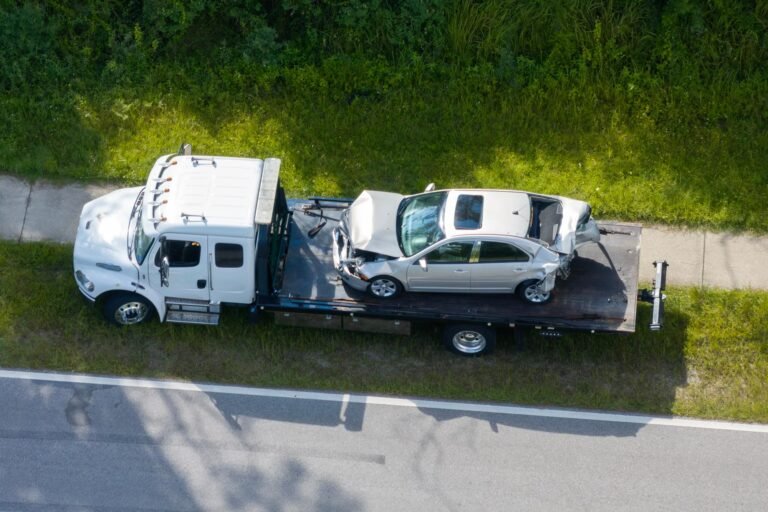
A car with a bent wheel, a cracked radiator, or a deployed airbag needs a flatbed. If an officer requests a rotation tow to clear the road, that truck takes the car to its own yard. If you call first, or the officer lets you choose, you decide where the car goes. Our accident towing in Santa Cruz takes the car straight to the body shop you or your insurer name, which avoids storage fees at a yard you then have to find.
The DMV SR-1 Report Most Drivers Miss
California requires every driver involved in a crash to file a Report of Traffic Accident Occurring in California, form SR-1, with the DMV within 10 days if anyone was injured or killed, or if property damage to any one person was more than $1,000. That applies regardless of who was at fault, and it is separate from any police report.
A crash bad enough to need a tow is almost always over $1,000 in damage. Missing the SR-1 can lead to a license suspension, so file it even if the insurance companies are already talking. The form is on the DMV website and takes about fifteen minutes with the other driver’s details in hand.
Calling Your Insurance Company
Call your insurer the same day if you can. Give them the date, time, and location, the other driver’s information, the police report number if there is one, and say where the car is. They will open a claim and give you a claim number; write it down, because every body shop and rental counter will ask for it.
California law lets you choose your own body shop; the insurer can recommend one but cannot require it. Keep the tow receipt, because most collision and towing coverage reimburses it, and if the other driver was at fault, their insurer may pay it. Ask whether your policy covers a rental car while yours is being repaired, before you need one.
Accidents on Highway 17 and Highway 1
Highway 17 between Scotts Valley and the summit has tight curves, short sightlines, and very little shoulder, which makes staying with a car after a crash dangerous. Get behind the barrier, call 911 or CHP, and let the officers and the tow truck handle the lane. The same advice applies anywhere a car breaks down on Highway 17, crash or not.
On Highway 1, the Fishhook merge, the Soquel Avenue and 41st Avenue exits, and the fog south of Aptos produce most of the rear-end collisions we see. Move the cars to the next exit if both are drivable and nobody is hurt; standing on the Highway 1 shoulder in fog is the riskiest part of the whole day. South of Aptos, on Highway 129, or on Highway 152, see accident towing in Watsonville.
After an Accident: Questions Santa Cruz Drivers Ask
Do I have to call the police after a minor accident in California?
Not always. If nobody is hurt and the cars are out of traffic, you can exchange information and leave. If anyone is injured, you must report it to CHP or the local police within 24 hours if no officer came to the scene.
What is the SR-1 form and do I need it?
It is the DMV’s accident report. You must file it within 10 days if anyone was injured or killed, or if damage to any one person’s property was over $1,000. Most crashes that need a tow meet that threshold.
Can I choose where my car is towed after a crash?
Usually yes, if you call a tow before an officer requests a rotation tow, or if the officer lets you choose. Tell the officer at the scene that you have a truck coming.
Should I drive my car home after a minor accident?
Only if no fluid is leaking, no airbag deployed, the wheels point straight, the lights work, and nothing rubs a tire. If any of that is wrong, have it towed; driving a damaged car can make the repair much bigger.
Does insurance pay for the tow after an accident?
Most policies with collision or towing coverage reimburse it, and the at-fault driver’s insurer may cover it. Keep the receipt and your photos with the claim.
If your car cannot be driven after a crash anywhere in Santa Cruz County, call Santa Cruz Aptos Auto Towing at (831) 464-1155. A flatbed will come to the scene, load the car without adding to the damage, and take it to the body shop you choose, with the receipt and photos your insurer will ask for.